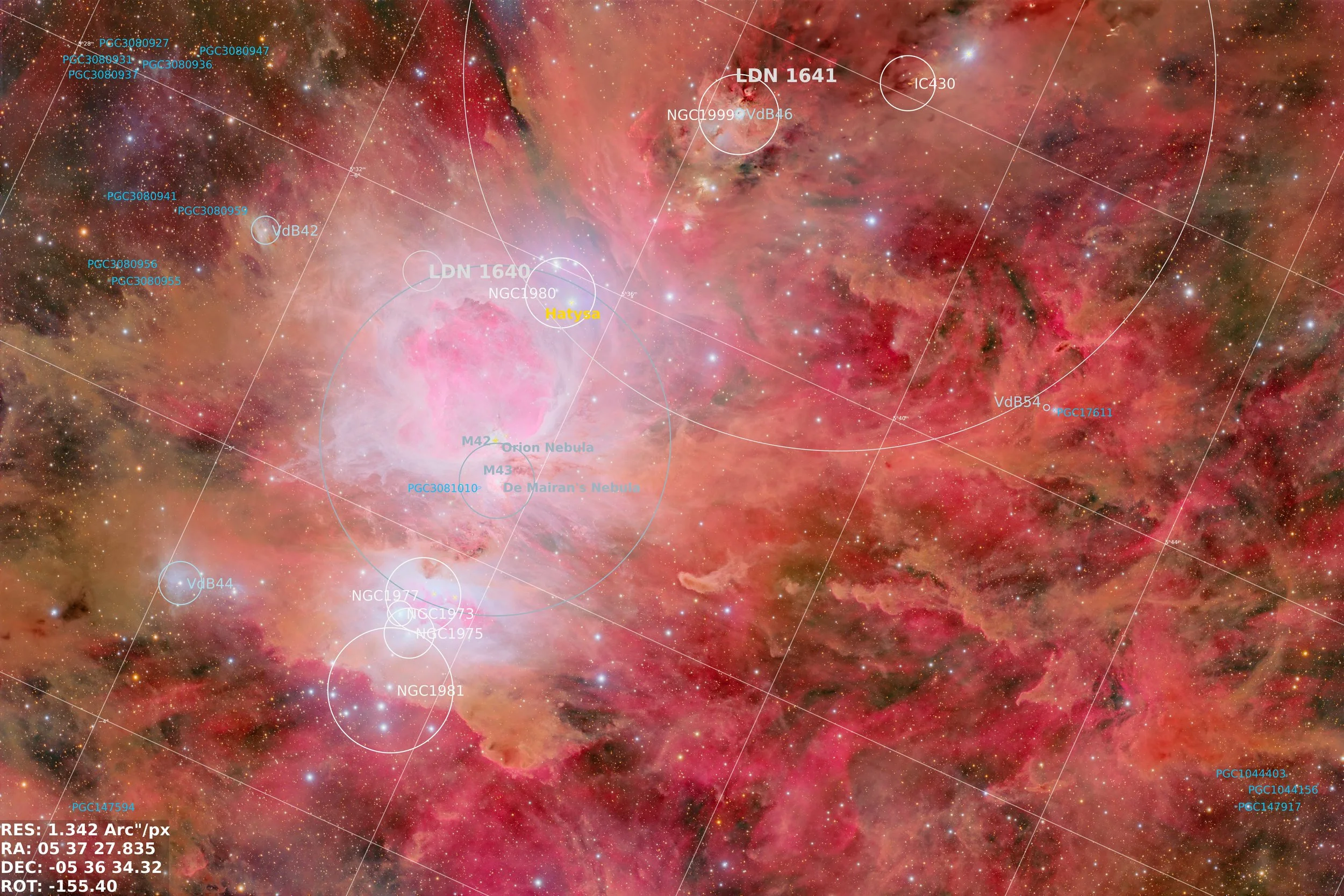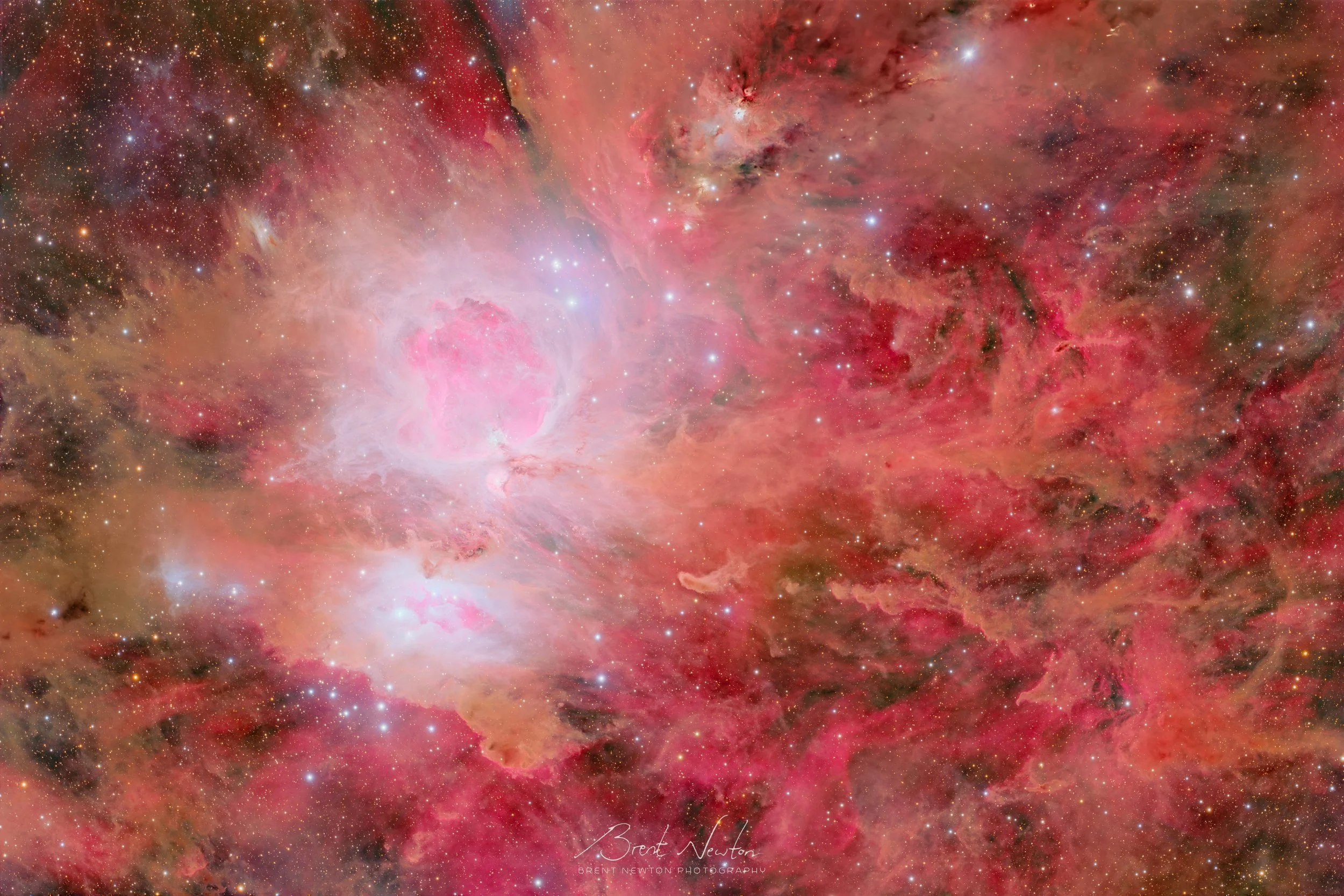
Peiresc’s Nebula (Orion’s Sword)
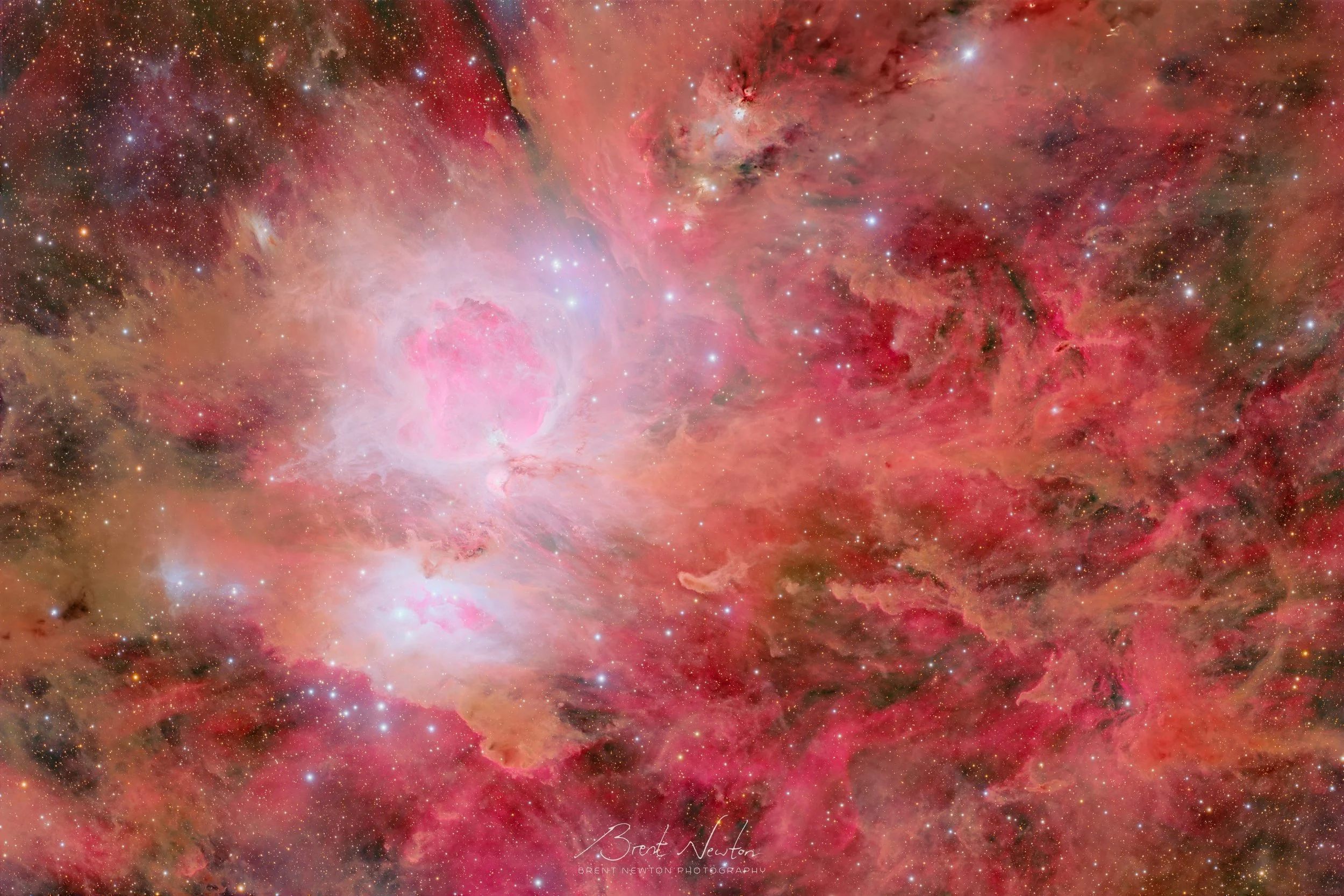
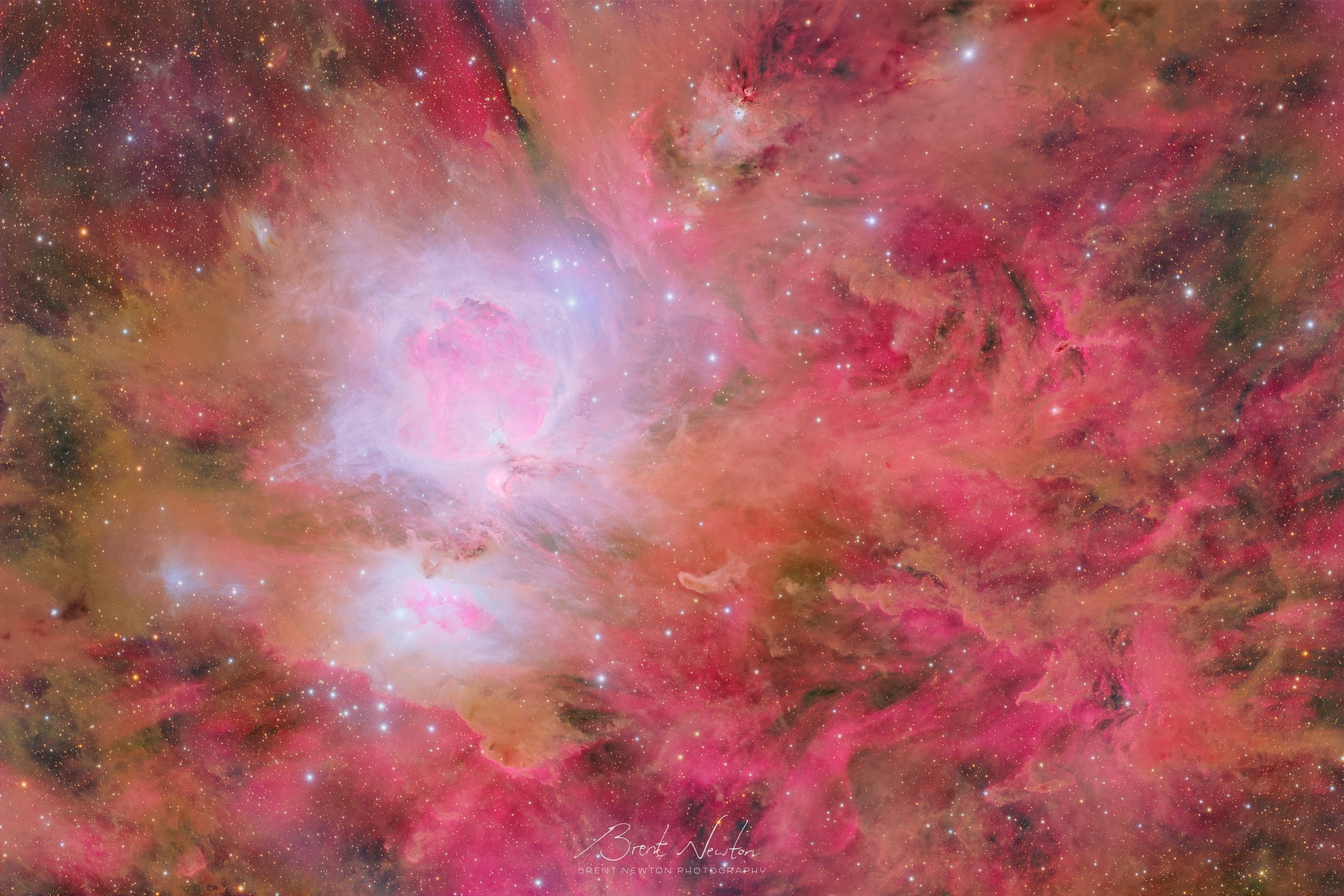
Image Details:
The Orion Nebula (Messier 42, or M42) is potentially one of the most-targeted objects in the night sky. Opportunistic landscape photographers probably keep the Summer Milky Way’s pale yellow band in 2nd place (right behind everyone who swears the Moon looks so BIG right now! and then takes a smartphone shot where it looks tiny), but anyone using deeper focal lengths will be familiar with this area of sky. A running joke among the circles of Astrophotographers is that you are legally obligated to shoot Orion every year. The nebula is bright enough to be naked-eye visible, colorful even under short exposures (and it may completely white out in longer exposures, a rare problem for deep sky objects), is in an area of sky which contains numerous other interesting regions to capture, and is close enough to the equator to be available to both hemispheres. This equatorial location is actually problematic for photography as well - while faint, a small series of streaks can be faintly observed starting from just above the centerline on the left side of the shot trailing down towards its right corner. This is the result of geostationary satellites ‘smearing’ across the shot while the telescope tracks the night sky against the rotation of the Earth.
Despite the apparent requirement to capture this nebula with frequency, I shot it in order to avoid capturing it again, or at least not for the next several years. This result is simply not something on which I can improve without development of next generation sensor technology, significant upgrades in optics, or infeasible amounts of added exposure times (especially given how bright this area of sky already is).
This nebula, around 1,270 light years distant, is so bright because it is an area of major stellar formation, meaning it is hosting hundreds of (relatively) new star systems. The coloration (as with all my deep sky shots) is due to 2 reasons; ionization and reflection. The red / magenta / pale pink tones are the former; Hydrogen atoms irradiated by ultraviolet starlight (or more intense parts of the electromagnetic spectrum) emit atoms along a series of wavelengths called the Balmer series. This series describes a primary (alpha) emission of deep red followed by lesser bands of Cyan, Blue, and Violet and Ultraviolet. Altogether this produces a Magenta tone for much of the shot. Strong reflection areas are responsible for the White-Blue coloring seen in the brighter parts of the photo, and dimmer reflection regions (or regions where the dust is thick enough to block much of the visible light emitted by proximal stars) appears as an Orange-Brown. All of this in the same area of sky (no matter how much you zoom in) means this region of space has something for almost any photographer, no matter their skillset or equipment. One notable addition in color is the Teal found in the bright nebulous core, which is caused by ionized Oxygen. This bandwidth is commonly seen as a pale blue (similar to regions of reflection), but it is strong enough here that it appears as a Teal or Sea Green, a rarity for deep space objects.
One other object of note in this area is NGC 1999 (see the third closeup image below). Also called the Cosmic Keyhole, this is a small area of reflection nebula located about 1,500 light years away (slightly further than M42’s 1,200) which contains an apparent hole. Astronomers were initially convinced this was simply an extremely dense and dark area of the nebula which was absorbing all visible starlight and thus appearing completely black, but extended observations using orbital telescopes (including the Hubble) eventually confirmed this was not a dense nebula, but a complete absence of it. The current theory is a nearby star may have cleared the area with intense radiation output, but this is not known for certain.
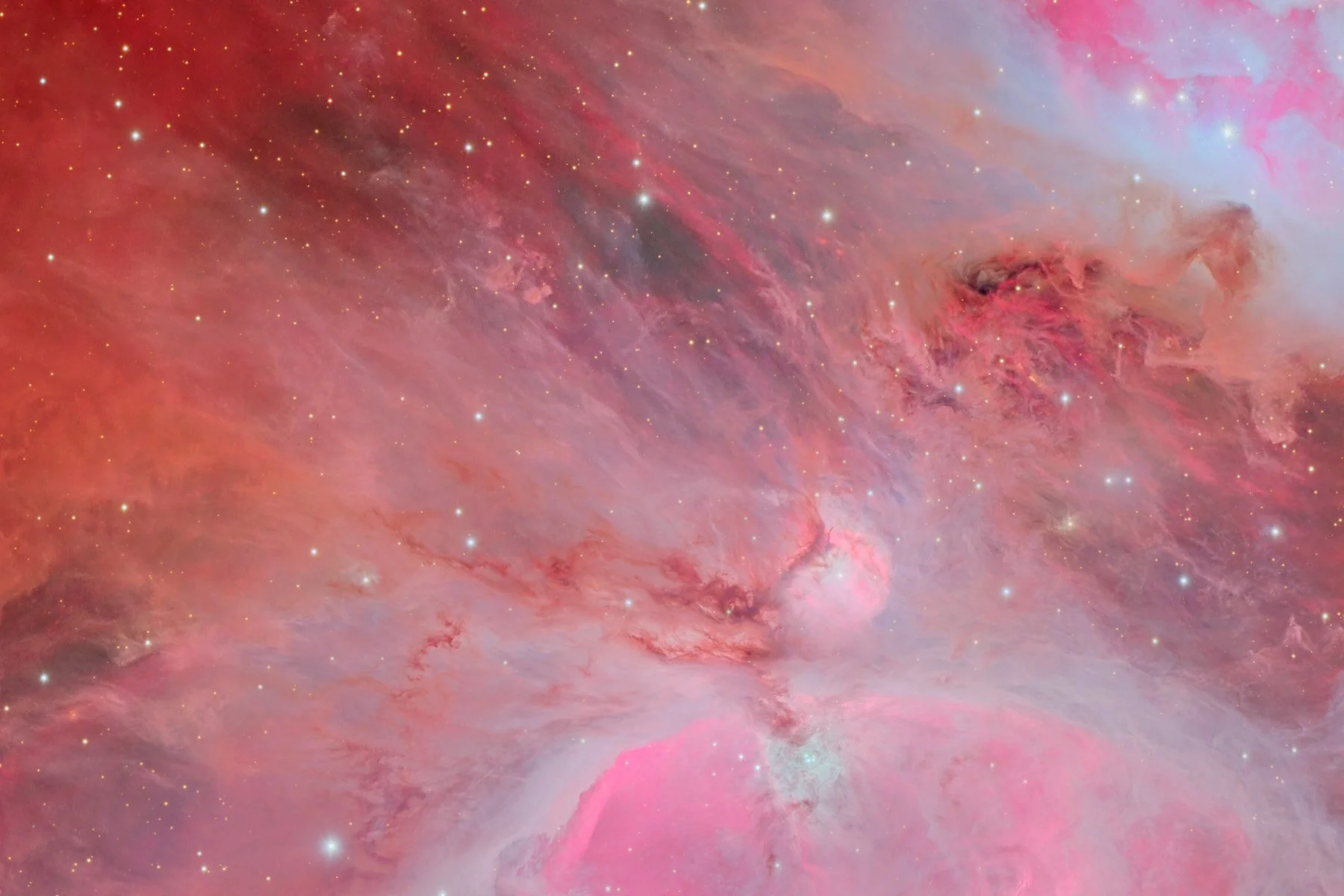
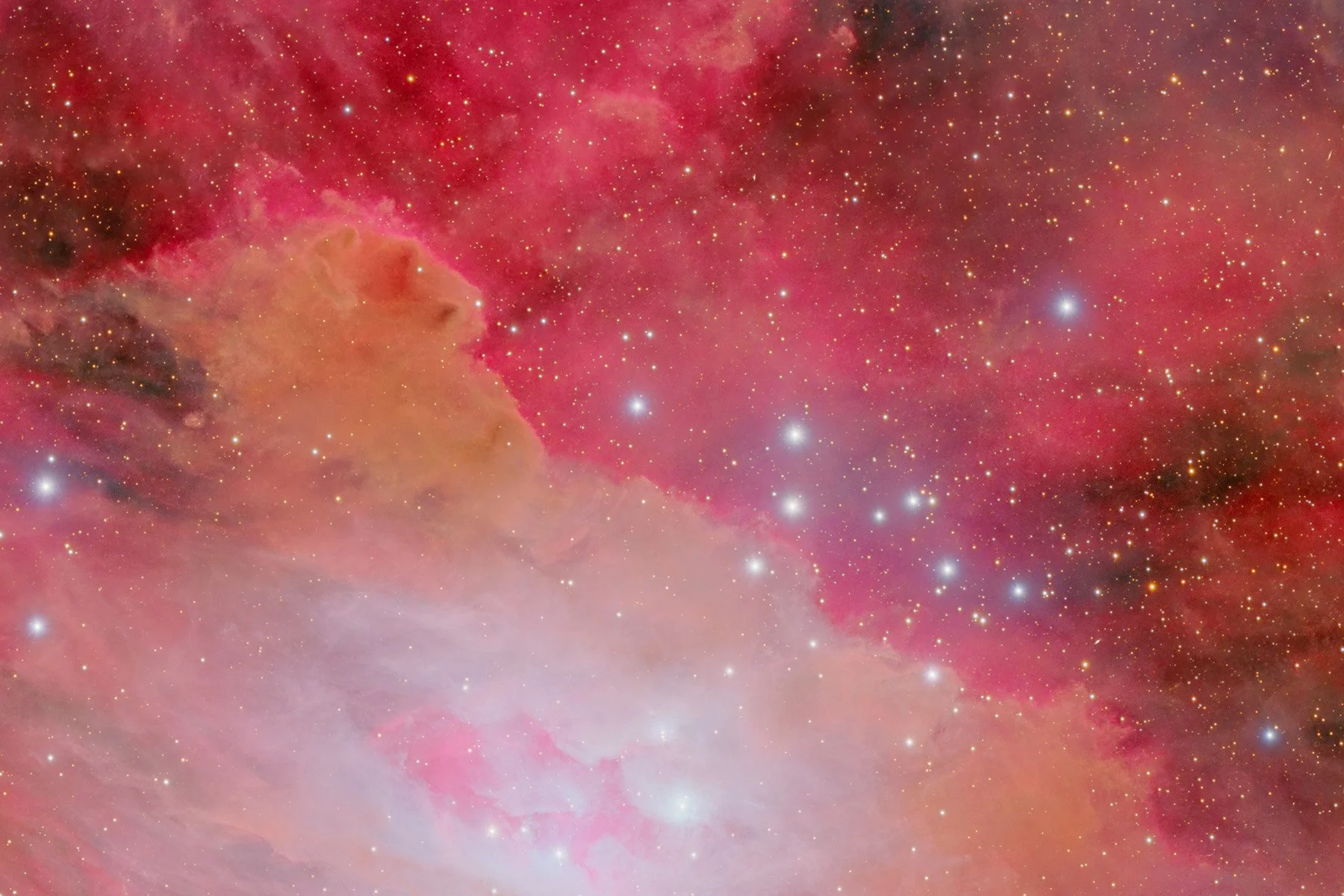
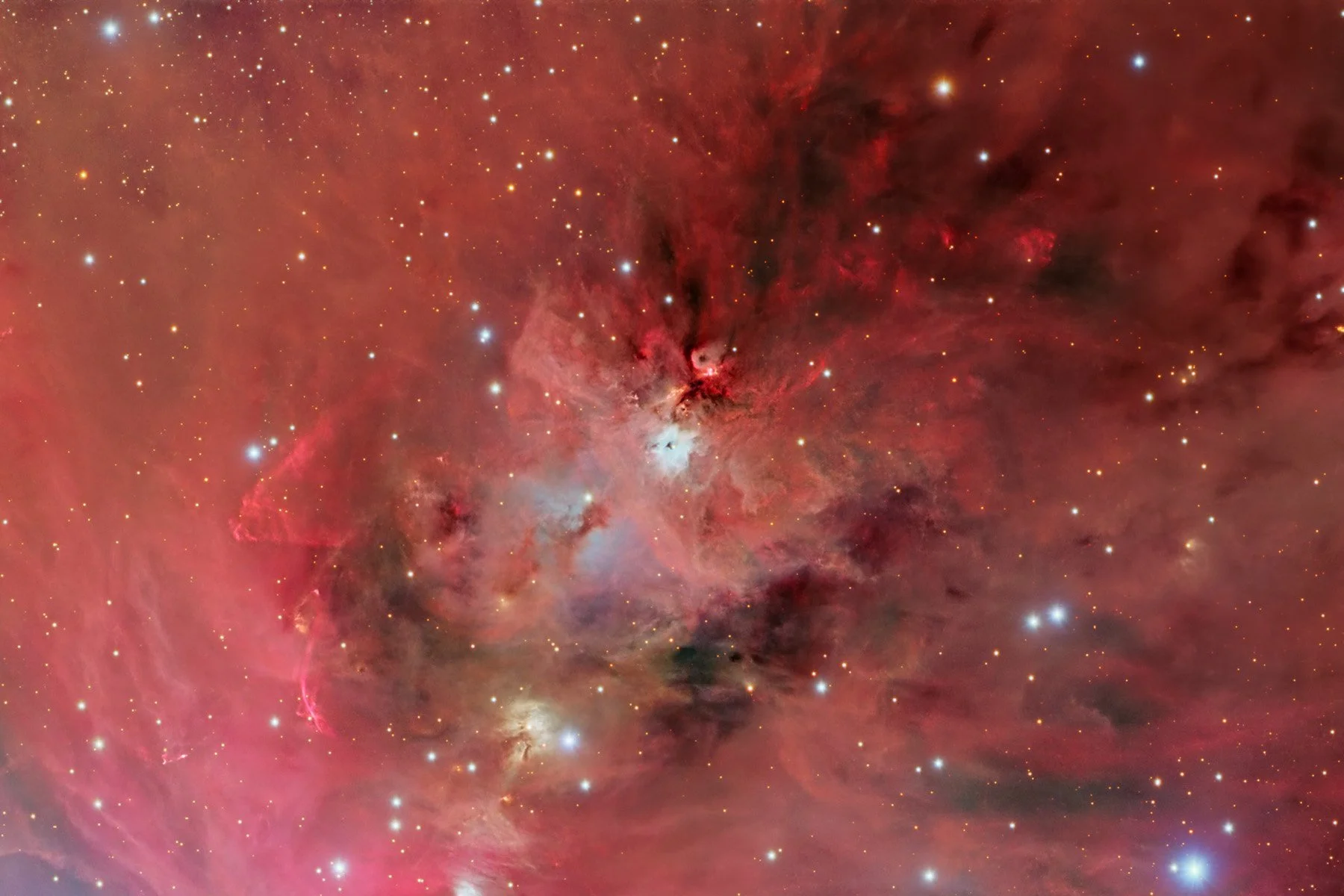
Narrowband Imaging:
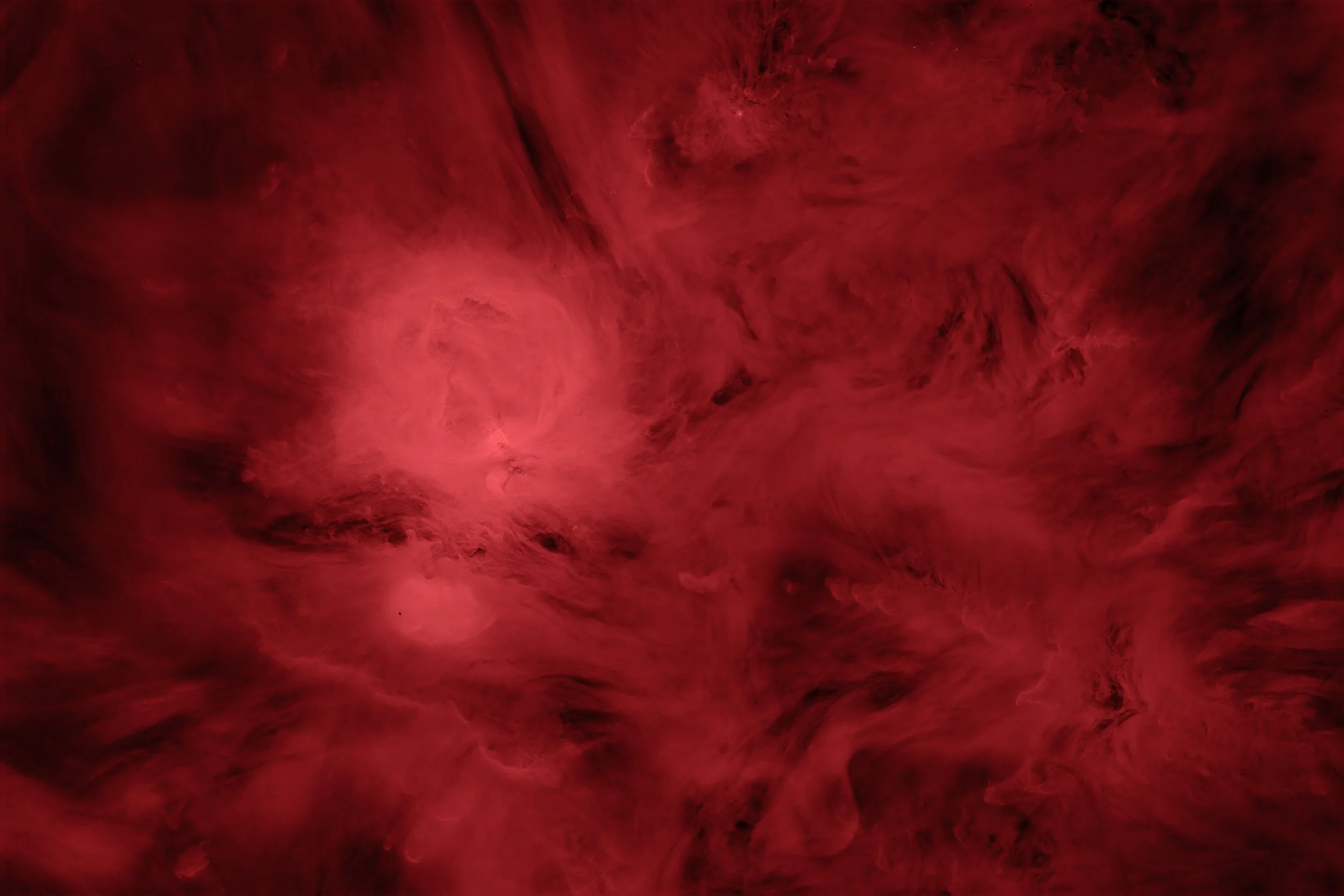
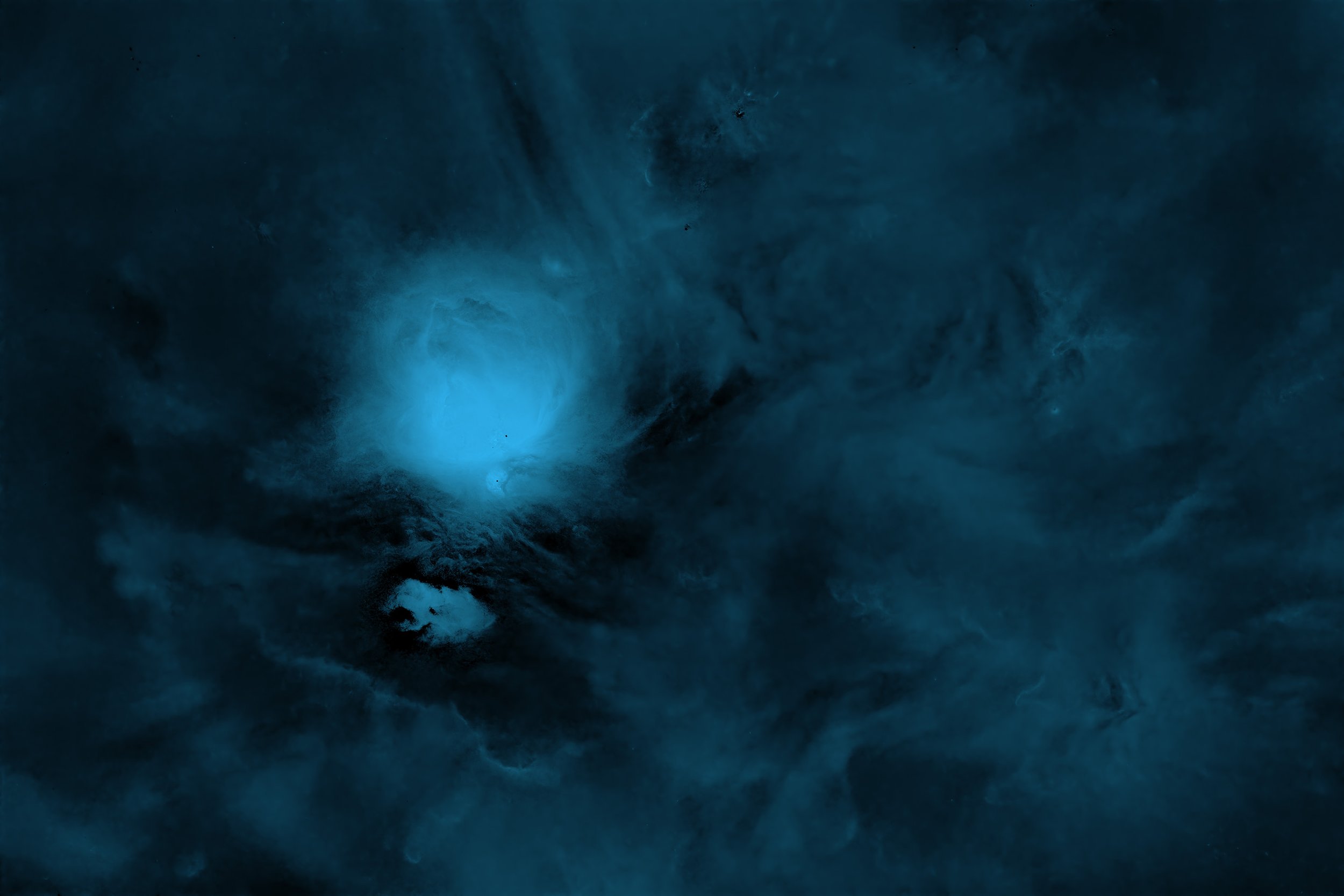
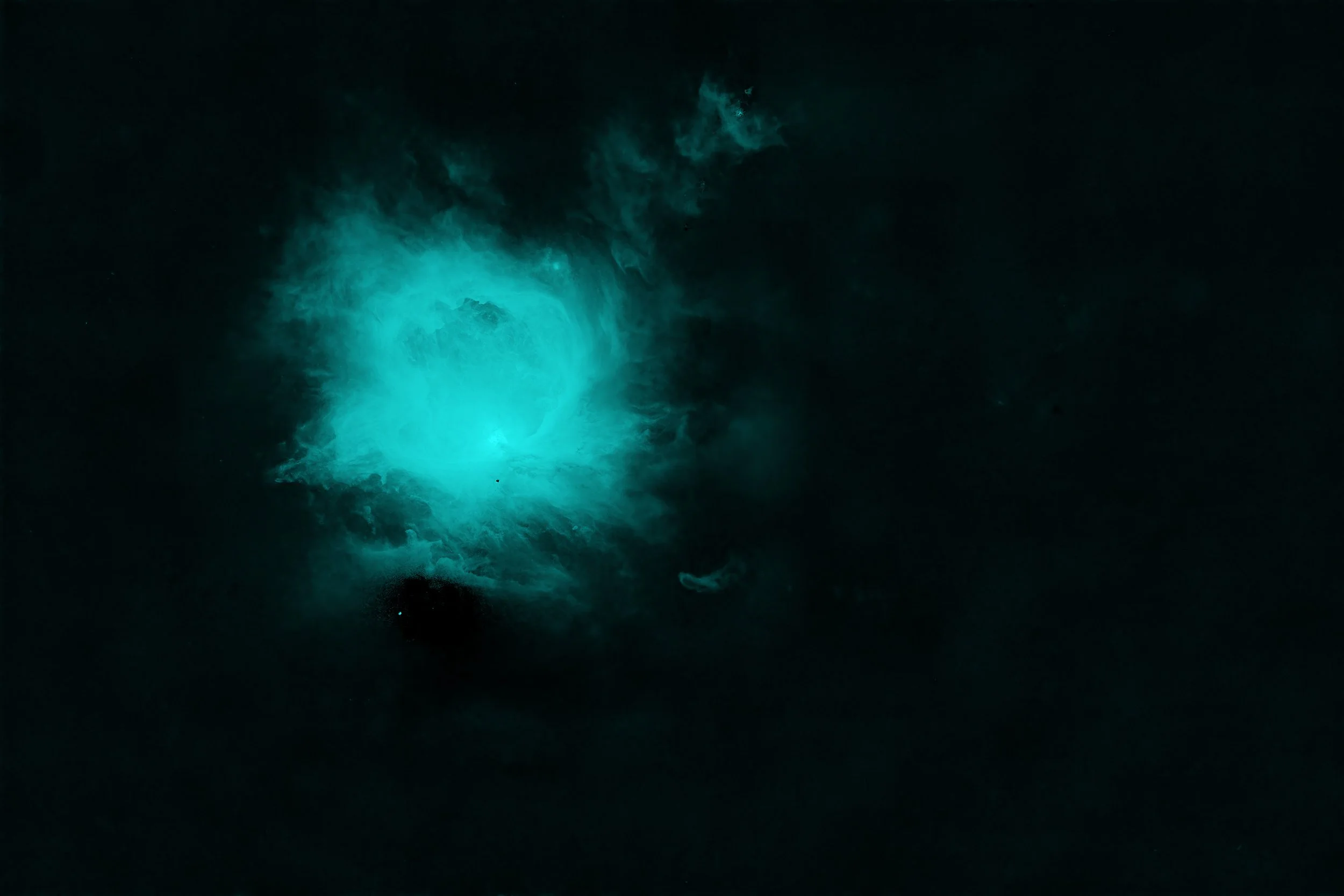
These are colorized images of the narrowband-filtered shots. The camera in use captures only in black and white, and while normal color shots involve simple Red, Green, and Blue filters sequentially placed in front of the camera during capture, these narrowband filters isolated the aforementioned bandwidths of Hydrogen and Oxygen mentioned above. This allows capture of high-contrast images which can improve overall image contrast, cut through (some) light pollution, and may often improve color on dim nebulous regions of sky. These images are again, actually black and white, or single-bandwidths of light (if that is easier to understand), but they have been colorized to demonstrate how they “actually” look in relation to their contribution to the color images seen above.
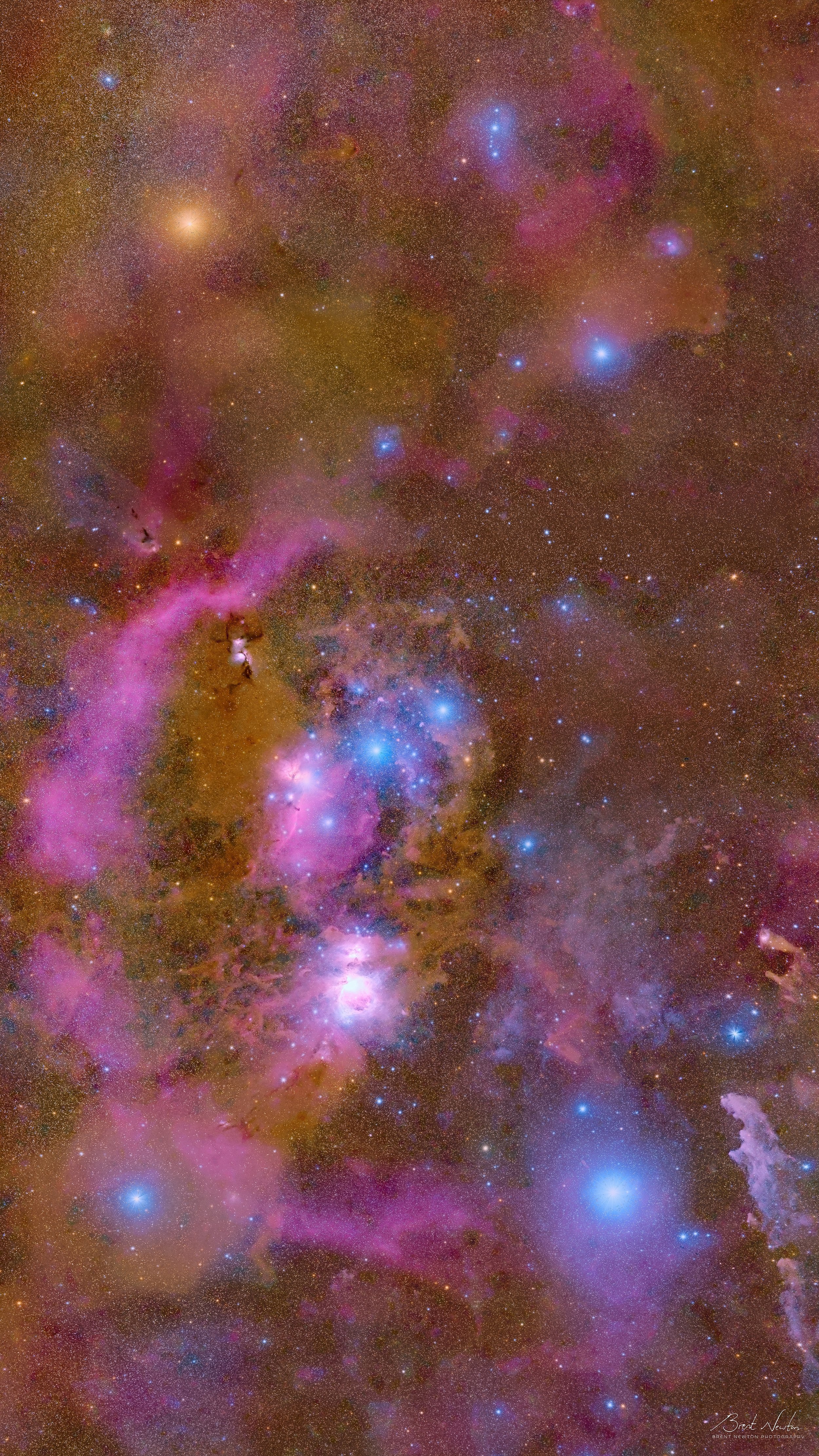
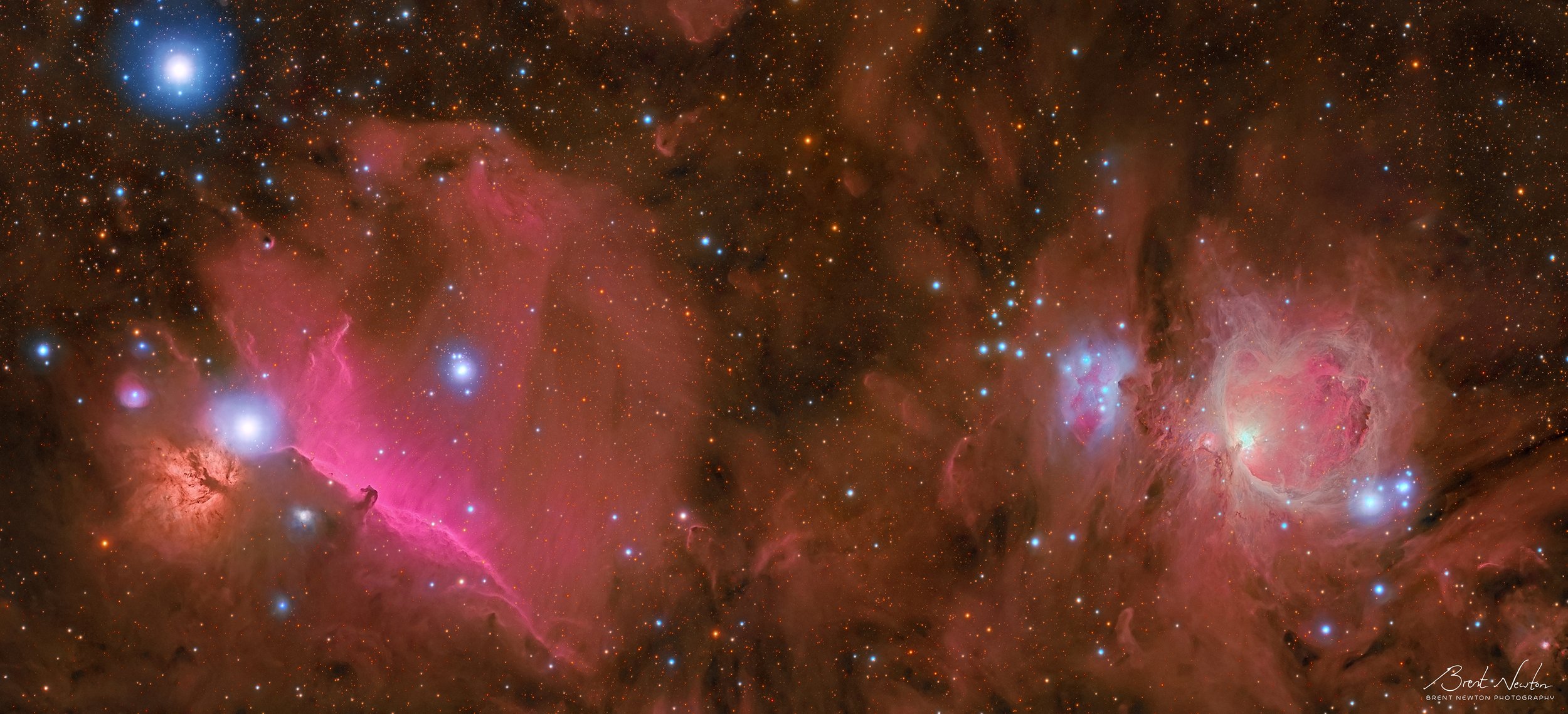
Previous work on this region from 2016-2025





Equipment:
TS Optics 86mm Petzval (459mm Focal Length F/5.4)
ZWO ASI6200MM-P, Antlia LRGB, 3nm HA and Oiii , Baader 8.5nm Hβ)
AstroPhysics Mach2GTO Mount
Autoguiding: Orion 50mm Guidescope + ZWO ASI174MM
Exposures:
Luminance: 223 x 300” (Total: 18h 35m)
Red, Green, Blue: 108, 98, 98 x 300” (Total: 25h 20m)
Hydrogen-A 3nm: 222 x 300” (Total: 18h 30m)
Hydrogen-β 8.5nm: 232 x 300” (Total: 19h 20m)
Oxygen-III 3nm: 200 x 300” (Total: 16h 40m)
Misc Details:
Capture Software: N.I.N.A. (capture), PHD2 (guiding)
Processing Software: PixInsight
Taken from: Starfront Observatories, TX, Bortle 1
Capture Dates: 2, 7-8, 10-11, 14, 20-21, 23, 26-27, 30-21 December, 2025, 2-3, 15-18, 21, 31 January, 2-6, 18-25 February, 2026 (35 total nights)