Rho Ophiuchus
Image Details:
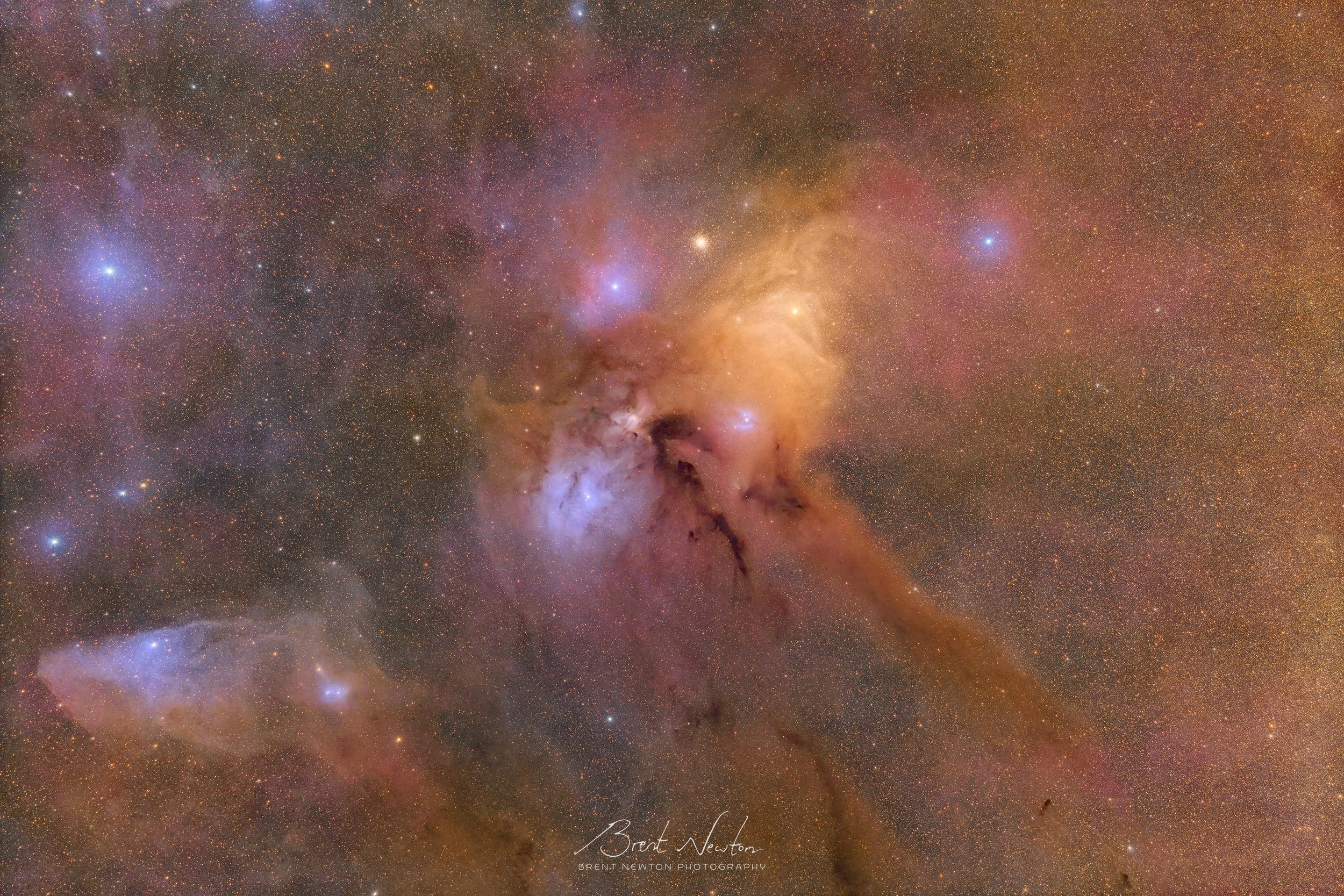
This region of sky is commonly captured in wider field shots and landscapes of the Milky Way (which is barely seen as the increasing yellow glow on the right side of this photo). This is a collection of star systems illuminating a collection of dust about 450 light years away (a similar distance to the Pleiades, albeit in an opposing part of the sky). This is a star-forming region which shows an incredible mix of all the colors seen in space (in visible light).
Blue regions reflect light through Rayleigh scattering (Reflection Nebula), the same function by which our own sky is blue, orange-brown regions reflect a small amount of light but absorb most of it (understandably called Dark Nebula), the bright yellow region shows a mix of reflected and absorbed light, and the dim red areas show Emission regions where ionized Hydrogen atoms emit photons of light along the Balmer series (predominantly red, lesser teal, even less violet, and then in several increasingly rarer bands of deep violet and then ultraviolet).
The bright yellow star seen in the midst of the yellow cloud is also a star of note, being called Antares. This is often pointed out by visual astronomers to newcomers to Astronomy as being literally not Mars. The etymological origin of this name derives to “Rival to Mars,” as the planet Mars periodically passes through this area of the sky and appears a similar color, so….literally: Not Mars.
Equipment:
2 x Rokinon 135mm (135mm Focal Length F/2)
2 x Canon EOS RP (unmodified)
ZWO AM5N Mount
Autoguiding: ZWO 30mm Guidescope + ZWO ASI178MM
Exposures:
One Shot Color: 182 x 300” (15h 10m)
Misc Details:
Capture Software: N.I.N.A. (capture), PHD2 (guiding)
Processing Software: PixInsight
Taken from: Texas Star Party near Ft. Davis, TX, Bortle ~2
Capture Dates: 11-12 May, 2026
Annotation
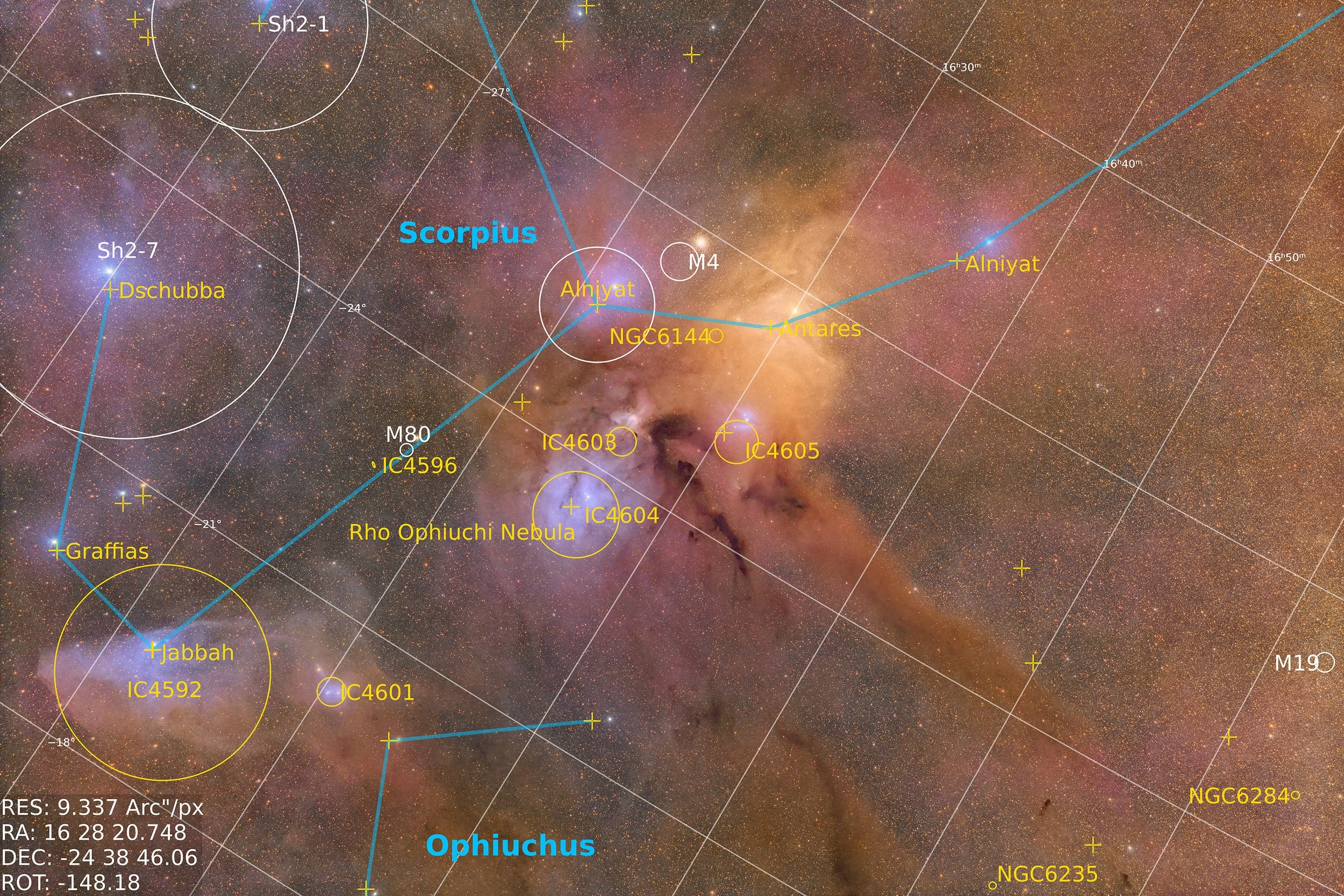
Milky Way Nebula
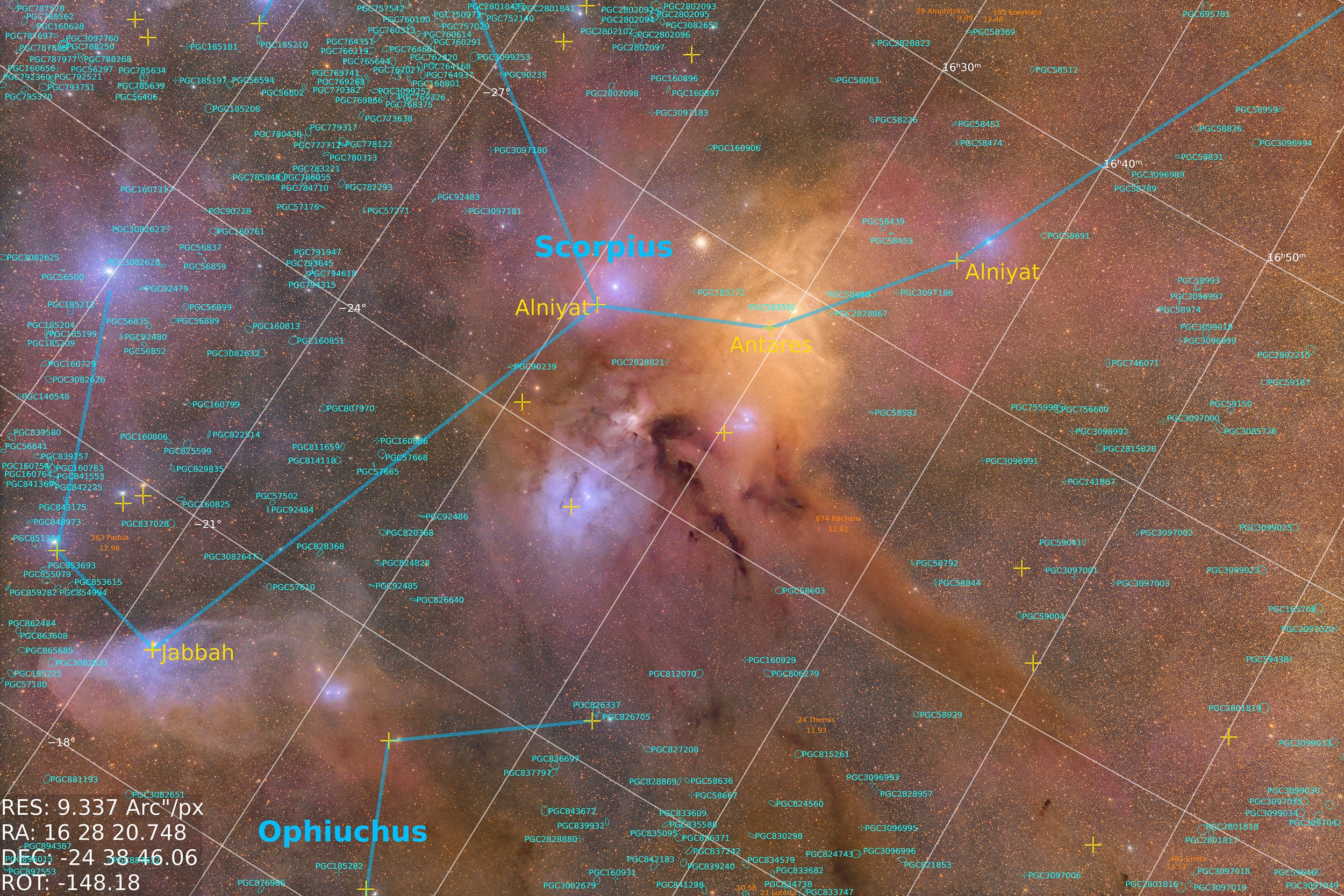
Galaxies beyond the Milky Way